

12 min read

Last agent routing is a cloud PBX feature that automatically reconnects a caller to the same agent who previously handled their case. It removes the need to repeat information, shortens handling time, and increases the odds of resolving an issue on the first contact.
Combined with secure mobility features and context-aware messaging, this kind of routing makes business communication faster, more consistent, and more reliable.
Anyone who has called a company back and had to explain the same problem from scratch knows how frustrating that is for the customer and for the agent.
This kind of friction is common in traditional phone systems, and it has a direct fix: modern cloud communication platforms can now recognize who is calling and prioritize reconnecting them with the agent who already knows their history.
In this article, we explain how this works in practice and why it's just one of several updates redefining what businesses should expect from a corporate phone system in 2027.
Modern business communication is about more than placing calls
Every company that handles customer calls has lived this scenario: a customer calls back about an open issue, but gets connected to a different agent.
They have to explain the difficulty, the history, and what was already agreed on all over again. The result is wasted time on both sides, a frustrated customer, and an operational cost that rarely shows up in reports but directly affects satisfaction and retention.
This kind of disconnected support creates rework, delays ticket resolution, and, in many cases, costs the business deals: a customer who feels like they have to “start from zero” every time loses confidence in the company.
That's why a company's cloud PBX infrastructure can't stand still. It needs to evolve at the same pace as customer expectations, which today include continuity and speed, and at the pace of how teams actually work: increasingly mobile and distributed.
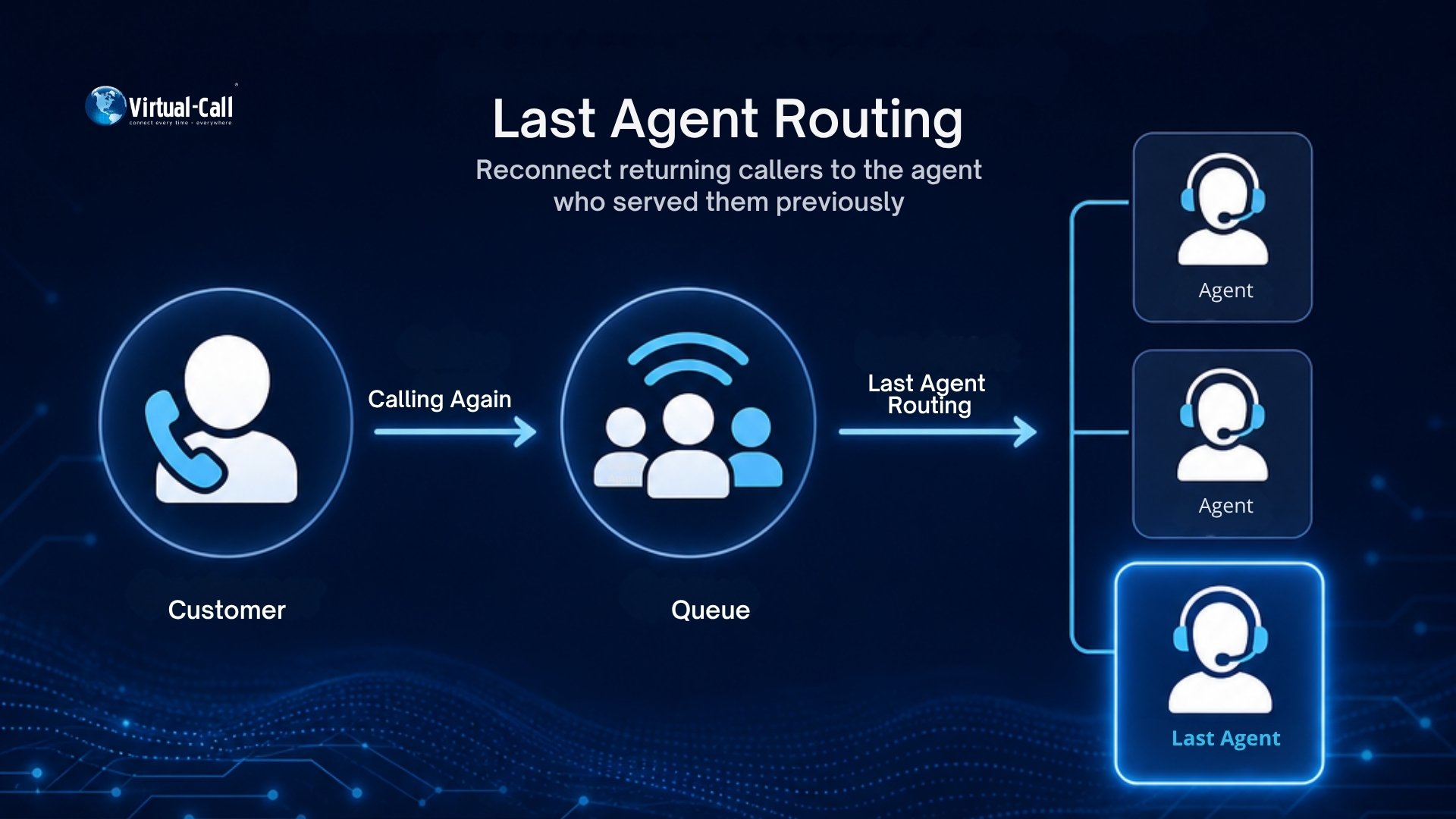
Continuity in support (the end of “Let me explain this again”)
The key feature here is last agent routing. In practice, when a customer calls back after a dropped queue call or to follow up on an issue already in progress, the system automatically prioritizes connecting them to the same agent who previously handled the case.
Quick definition: Last agent routing is the cloud PBX capability that automatically reconnects a returning caller to the same agent who handled their case in a previous call.
Business impact:
- Shorter average handling time (AHT), since the agent already has context from the previous conversation.
- Higher first-contact resolution (FCR), because there's no need to re-investigate the issue.
- A more personalized experience for open cases, which strengthens how customers perceive the brand's attentiveness.
For companies with technical support, billing, or customer success teams, this kind of routing is especially valuable for cases that require ongoing follow-up, such as ticket resolution, active negotiations, or collections.
Executive mobility and flexibility without losing critical calls
Hybrid work, field teams, and remote sales reps are already the norm across most B2B companies. The challenge is making sure that mobility doesn't come at the cost of governance over business communication.
Two features address this directly: the redesigned mobile app and confirmed handoff for calls forwarded to external numbers (call confirm).
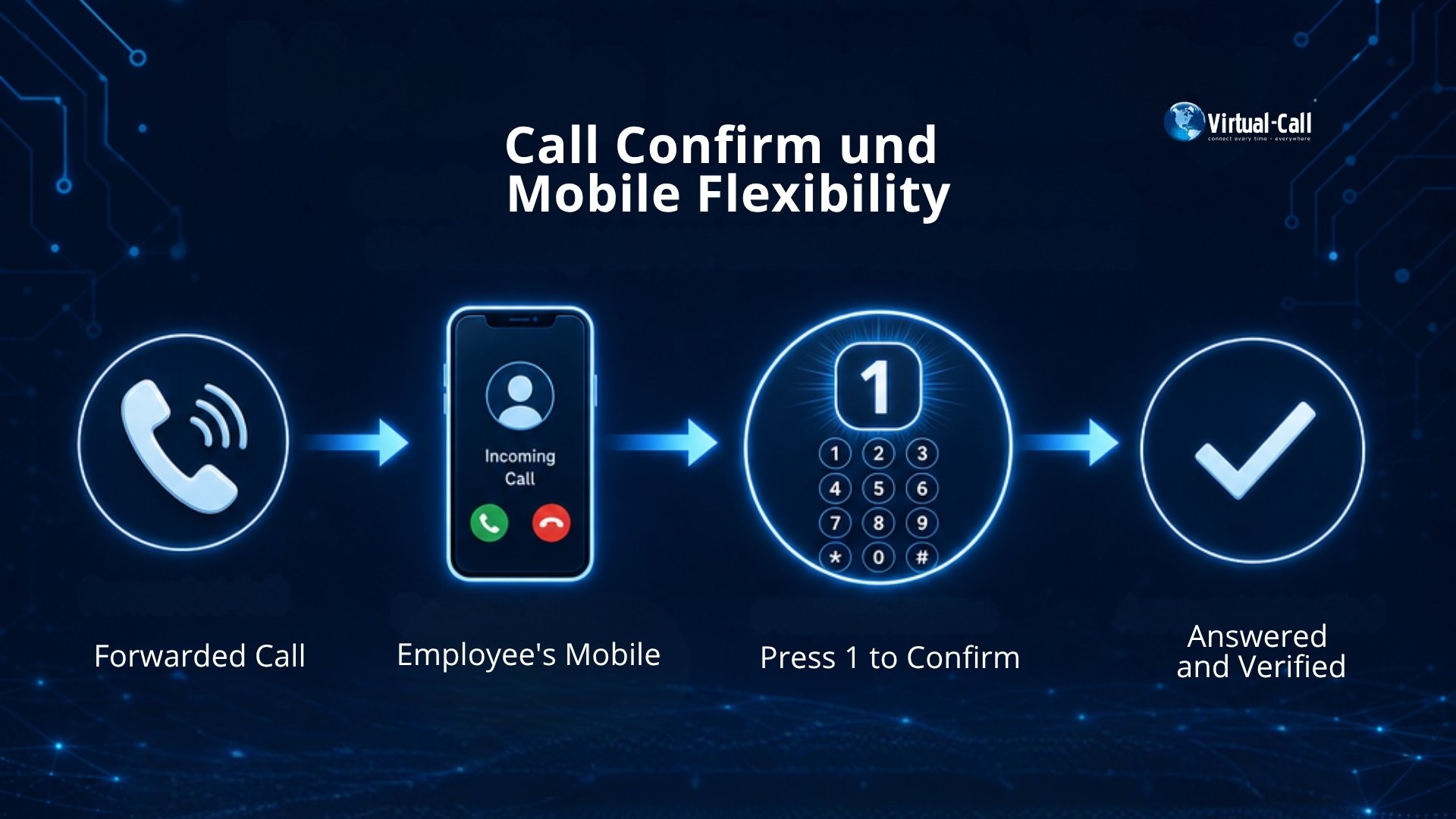
The problem it solves: when a call is forwarded to an employee's personal mobile number, it often ends up in voicemail, and without proper controls, the system may still log that call as “answered,” even though the customer never actually spoke with anyone.
With call confirm, the employee has to press a key (typically 1) to accept the call before it counts as answered.
This ensures that only a real conversation gets counted and that whoever picks up is actually taking ownership of that customer.
The redesigned mobile app with faster login, a customizable menu, and quick-copy for contacts also reduces day-to-day friction for sales and support teams that are constantly on the move.
That matters because when a corporate app is clunky, employees fall back on personal channels the company can't control, which is both a security risk and a continuity risk.
Flexibility and resilience in ring groups and call queues
Even with well-trained agents and solid processes, every support operation faces the unexpected: an entire group unavailable, a demand spike outside business hours, or the need to redirect calls to an outsourced partner in specific situations.
The problem is that, on traditional systems, adjusting this kind of rule means reconfiguring extension by extension, a slow, error-prone process.
The key feature here is flexible ring group and queue call routing. It allows businesses to:
🔸Apply “forward all calls” rules directly to ring groups and queues, not just to individual extensions.
🔸Add an external number as a member of a ring group, so incoming calls can be automatically routed to that destination when needed.
Business impact: less manual configuration time for IT teams; faster adaptation to demand spikes, staff absences, or operational changes; and guaranteed continuity even when the internal team isn't available, for example, by routing calls to an on-call partner or certified provider outside business hours.
For companies running multiple queues (support, sales, billing), this flexibility reduces dependence on constant technical intervention and gives management the autonomy to adjust call flow as business needs change.

Messaging and omnichannel with real context (WhatsApp, chat, and social)
Serving customers over WhatsApp, website chat, or social media is already standard practice. The problem is when these conversations lack context, and different agents reply without knowing what was already said.
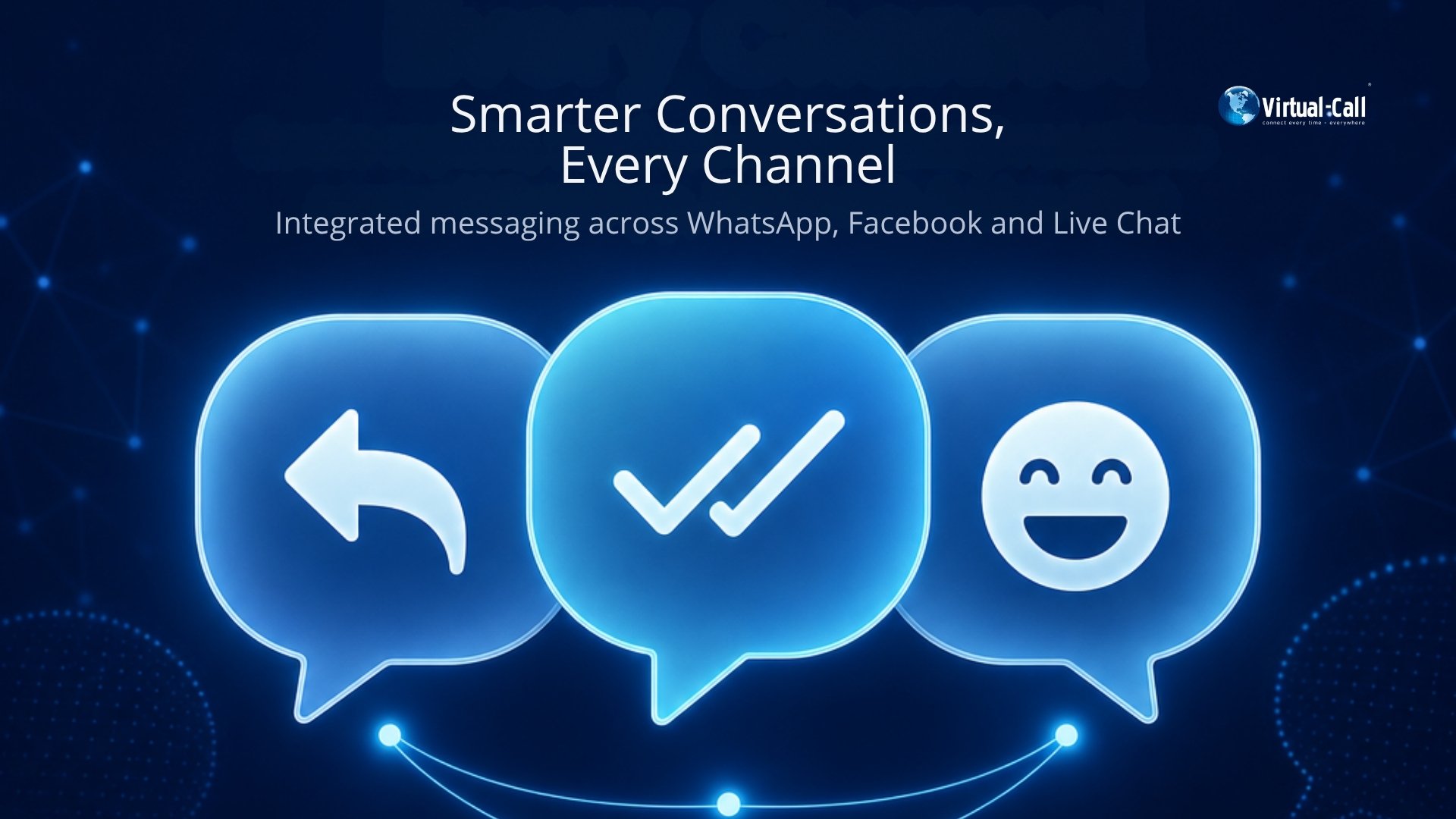
Three features solve this friction point: quote reply, read receipts, and emoji reactions.
Business impact: faster, clearer communication across support and sales conversations integrated into the PBX. Quote reply keeps things clear when several questions come up at once; read receipts help agents decide whether to follow up; and emoji reactions speed up simple confirmations without requiring a new text message.
How Virtual-Call Implements and Strengthens These Solutions for Your Business
Having these features available on a cloud PBX platform is the first step. The second and more decisive one is making sure the infrastructure behind that communication is stable, secure, and properly configured for your business.
That’s where Virtual-Call comes in. We combine Yeastar’s technology with a robust connectivity infrastructure, including high-availability SIP trunking, business numbering that meets regulatory requirements, and consultative support.
This means your company doesn’t just gain access to these features. It uses them strategically to cut operating costs, improve scalability, and protect business communication against fraud and unauthorized calls.
Modernizing your phone system isn't about swapping one device for another anymore. It's about giving your team and, above all, your customers a faster, more consistent, and more reliable support experience.
Frequently asked questions
1. What is last agent routing?
Last agent routing is a cloud PBX feature that automatically recognizes who is calling and connects them to the same agent who handled their case previously, so they don't have to repeat information already provided.
2. How is intelligent routing different from traditional call routing?
Traditional routing distributes calls based on queue order or agent availability, without considering the caller's history. Intelligent routing uses the caller's number or identity to prioritize reconnecting them with a specific agent, preserving continuity of support.
3. Does call confirm work for any transfer to a mobile number?
Yes. Call confirm can be set up for any call forwarded to an external number, requiring the recipient to press a key (typically 1) to confirm they're answering before the call is logged as answered.
4. Do these features require replacing the entire phone system?
Not necessarily. On cloud PBX platforms, these capabilities are usually available as a version update or additional configuration, without needing to replace hardware or change business numbers.
5. How long does it take to implement intelligent routing for a company?
Timelines vary depending on the size of the operation and the current infrastructure, but configuring routing rules on an already-deployed cloud PBX typically takes a few days to a few weeks.
6. Can an entire queue's calls be redirected to an external number?
Yes. Flexible ring group and queue routing allow an external number to be added as a group member, ensuring calls are still answered even when the internal team is unavailable.
Conclusion
- Last agent routing reduces rework and increases first-contact resolution.
- Confirmed handoff on external transfers ensures your mobile team actually reaches the customer.
- An easy-to-use mobile app keeps employees from relying on personal channels outside company control.
- Context-aware messaging features make WhatsApp and chat support clearer and more human.
- Technology alone isn't enough: it needs to run on a well-implemented cloud communication infrastructure.
In summary: Companies that adopt intelligent last agent routing, mobility with confirmed call handoff, and context-aware messaging reduce rework, increase first-contact resolution, and deliver a more consistent support experience without having to replace their entire phone infrastructure.
Want to see, in practice, how these features can cut costs and improve customer satisfaction? Schedule a personalized demo with the Virtual-Call team and explore the potential of your communication operation.
We connect you to the world! 🌍